
Portugal’s Golden Visa remains open in 2026, but it is no longer the same programme many investors remember from a few years ago. The old real estate route has gone, fund scrutiny is tighter, and investors now need a clear view of which routes still qualify before they move capital. This guide compares the Portugal Golden Visa investment options 2026 investors can still use, including investment funds, cultural support, scientific research, business investment, and job creation. It also explains the Portugal Golden Visa requirements, the application process, family benefits, risks, costs, and the questions to ask before you commit.
Portugal Golden Visa Investment Options 2026
The Portugal Golden Visa investment options 2026 market is built around one main idea: investment must support areas of the Portuguese economy beyond simple property purchase. That is a sharp change from the old Golden Visa Portugal real estate model, where buyers often looked at Lisbon, Porto, the Algarve, rehabilitation property, or lower-density regions as the route into residence in Portugal.
Today, the Portuguese Golden Visa, officially known as the ARI residence permit for investment activity, is still a residency-by-investment programme for eligible non-EU, non-EEA and non-Swiss nationals. According to the official AIMA ARI guidance, the permit can allow qualifying applicants to reside and work in Portugal, circulate through the Schengen Area, benefit from family reunification, and request permanent residence or Portuguese nationality if the separate legal requirements are met.
That said, Portugal does not sell a passport. Phrases such as Portugal citizenship by investment, Portuguese citizenship by investment, golden passport Portugal, or Portugal passport by investment may appear in search results, but they can mislead readers. The Golden Visa is a residence route first. Portuguese citizenship may be possible later only if the applicant meets the nationality law in force at the time, along with language, residency, and conduct requirements.
For high-net-worth families, the question is not just “how much is a Golden Visa in Portugal?” The better question is which qualified investment fits the family’s risk profile, timeline, liquidity needs, tax position, and long-term plans. That is where many applicants need tailored advice rather than a generic checklist.
| Portugal Golden Visa route in 2026 | Minimum investment | Capital return profile | Investor effort | Best suited to |
| Qualifying non-real-estate investment fund | €500,000 | Possible return, not guaranteed | Low to moderate | Passive investors who want a regulated fund structure, professional management, and a planned exit |
| Cultural or artistic support | €250,000, or €200,000 if the 20% low-density reduction applies | Usually non-refundable | Low | Applicants who want the lowest qualifying route and accept no capital recovery |
| Scientific research | €500,000, or potentially €400,000 if the 20% low-density reduction applies | Usually project-specific; return not guaranteed | Moderate | Investors who want capital tied to scientific, technological, or public-interest research |
| Job creation | 10 jobs, or 8 jobs if the 20% low-density reduction applies | Business dependent | High | Entrepreneurs or companies with a real hiring plan in Portugal |
| Business investment plus jobs | €500,000 plus job creation or job-maintenance conditions | Business dependent | High | Investors who want to establish, expand, or recapitalise a Portuguese company |
What Changed in the Portugal Golden Visa Program?
The most important Portugal Golden Visa changes are simple but often missed. New applicants can no longer rely on real estate investment as the core route. The older Portugal Golden Visa 280k, Portugal Golden Visa 350,000, Golden Visa Lisbon property, and Portugal Golden Visa real estate investment searches are now mostly historical. Those routes may still appear in old articles, old videos, and outdated agency pages, but they should not guide a 2026 application.
The practical result is that investors now compare Portugal Golden Visa investment funds, cultural contributions, research projects and business routes. This change has made due diligence more important. A property purchase was easy for many people to understand.
A fund structure, by contrast, asks better questions. What does the fund invest in? Who is the fund manager? What is the maturity period? Is the strategy genuinely compliant? How does the exit work? What fees apply? What happens if the market turns?
Why Real Estate No Longer Qualifies
Real estate was once the headline attraction of the Golden Visa in Portugal. It gave investors something tangible, familiar, and easy to explain. But the policy direction changed after concerns about housing pressure and foreign capital in the property market.
AIMA’s legal framework is clear on the point. The current investment activities “cannot be intended, directly or indirectly, for real estate investment,” according to the official AIMA ARI legal framework PDF. That line matters. It means investors should be careful not only with direct property purchases, but also with funds or structures that might have real estate exposure in substance, even if they are marketed as Golden Visa funds Portugal investors can use.
Why the Fund Route Became More Popular
Once real estate disappeared, the Portugal Golden Visa investment fund route became the dominant passive option for many applicants. A qualifying fund can allow the investor to place capital into a regulated structure without running a company, hiring staff, or managing a Portuguese property.
That does not make funds risk-free. A Portugal Golden Visa fund is still an investment, not a bank deposit. Returns can vary, exits can take time, and fund documents need professional review. Still, for investors who want a cleaner, more hands-off Portugal investment visa route, funds are often the first place they look.
For a private-client adviser such as Jason Swan, the task is not to push the first available fund. It is to narrow the noise, review suitability, and help the client understand what is compliant, what is credible, and what makes sense for their personal circumstances. You can learn more about that private-advisory approach through Jason Swan’s Portugal Golden Visa background.
Portugal Golden Visa Fund Investment Route
The Portugal Golden Visa investment fund route usually requires a minimum investment of €500,000 into eligible non-real estate collective investment undertakings established under Portuguese law. AIMA states that the fund must have a maturity of at least five years at the time of investment, and at least 60% of the investment value must be made in commercial companies based in Portugal. That is why the fund route needs proper legal, financial, and regulatory review before any subscription.
In plain English, the fund must be built for the current law, not the law as it stood when real estate was still valid. Investors should be wary of vague language. A fund might sound attractive because it mentions Portugal, hospitality, infrastructure, tourism, or asset-backed returns. Yet the real test is whether access to apply for the Portugal Golden Visa remains secure after legal review.
A Portuguese Golden Visa investment fund may suit an applicant who wants exposure to Portuguese companies without direct management duties. It may also suit families who do not plan to live in Portugal immediately but want a structured route toward residence in Portugal, Schengen access, and future optionality.
What Makes a Portuguese Golden Visa Fund Eligible?
A qualifying Portugal Golden Visa investment fund should be non-real estate in purpose and structure. It should be established under Portuguese law. It should meet the maturity requirement. It should invest enough capital in Portuguese commercial companies. It should also provide documentation strong enough for lawyers, banks, and immigration authorities to review.
This is where the phrase “Portugal Golden Visa official website” becomes important for searchers. Investors should check official AIMA guidance and work with qualified lawyers rather than rely only on marketing decks. The fund documents, subscription agreement, legal opinion, regulatory status, and investment policy all matter.
A serious adviser will also look beyond eligibility. The fund may qualify on paper, but that does not automatically make it suitable. A fund with poor liquidity, weak governance, unclear exits, or high fees can still cause problems for an investor who has met the immigration threshold.
Pros of the Portugal Golden Visa Investment Fund Route
The main appeal of the fund route is that it can be relatively passive. The investor does not need to find tenants, manage repairs, employ staff, or run a Portuguese company. The fund manager handles the day-to-day investment strategy, while the investor holds a qualifying participation.
There may also be commercial upside. Some Portuguese investment funds target private equity, venture capital, growth companies, credit, infrastructure, or other sectors linked to the Portuguese economy. A good fund may provide reporting, governance, independent valuation, and a defined term. For globally mobile families, that structure can feel cleaner than an operating business.
Another advantage is planning. The route can sit alongside wider wealth structuring, tax advice, succession planning, and relocation strategy. For clients from the UK, the US, the Middle East, or Asia, the Golden Visa is rarely a stand-alone decision. It often sits inside a larger conversation about family mobility, education, asset location, future retirement, and access to Europe.
For a deeper comparison of fund-led routes, JS Privé features a focused section on Portugal Golden Visa funds.
Risks of Golden Visa Investment Funds in Portugal
The fund route can look tidy from a distance, but investors should not treat it as a formality. A Portugal Golden Visa investment fund can carry market risk, manager risk, liquidity risk, currency risk, and exit risk. If a fund invests in early-stage companies, private credit, or niche sectors, returns can be uneven. If the fund term is long, investors may not be able to access capital when they want it.
Fees need a careful read as well. Management fees, subscription charges, performance fees, administrative costs, and exit costs can change the real outcome. Tax treatment also matters, especially for US citizens, UK residents, non-doms, Dubai-based families, and investors with trusts or international holding structures.
The real danger is choosing a fund because it sounds popular. Popular is not the same as suitable. A careful investor should ask whether the fund’s risk profile matches their own. If the answer is unclear, the decision is not ready.
Questions to Ask Before Choosing a Fund
A good fund discussion should feel specific. The investor should understand the fund strategy, target sectors, term, liquidity rules, legal opinion, fee schedule, audit process, reporting standard, and exit assumptions. The investor should also know whether the fund has any direct or indirect real estate exposure, because that can affect the Golden Visa analysis.
It is also worth asking how many Golden Visa investors the fund already has, whether any applications tied to the fund have progressed, how capital calls work, and what happens if the investor later needs to renew the residence permit. In many cases, the quality of the adviser, lawyer, and fund manager matters as much as the brochure.
Cultural Donation Route: The €250,000 and €200,000 Option
The cultural route is often the lowest-cost path among the Portugal Golden Visa investment options 2026 applicants still consider. The standard amount is €250,000 for investment or support linked to artistic production, cultural heritage recovery, or maintenance. In qualifying low-density cases, the threshold may be reduced, which is why some investors see references to a €200,000 route.
This route appeals to applicants who prefer a simpler capital commitment and do not need a return. It can be attractive for families that see the Golden Visa as a residency and mobility tool rather than an investment product. But here’s the thing: lower cost does not always mean better value. If the contribution is non-refundable, the investor should compare the all-in cost against a fund route where capital recovery may be possible, even if not guaranteed.
Who Should Consider the Cultural Route?
The cultural option may suit applicants who want a lower minimum investment, a cleaner route, and fewer commercial variables. It may also work for investors who value cultural legacy and do not want to monitor fund performance.
It may not suit someone who expects the capital to come back. This is where search terms like Portugal Golden Visa 280000 or Golden Visa Portugal 350.000 can lead people into the wrong mindset. A lower headline number only tells part of the story. The net cost, legal risk, approval status, and personal objective matter more.
What to Check Before Using the Cultural Route
Before choosing a cultural project, investors should verify eligibility, project approval, documentation, receiving entity, low-density status if relevant, and the timing of each payment. The applicant should also check whether the route remains open and practical at the time of application, because availability can change.
A lawyer should confirm the exact documentation required for the Portugal Golden Visa application. A private adviser can then help compare whether the cultural route is still the most suitable option once legal fees, family size, and long-term plans are included.
Scientific Research Investment Route
The scientific research route requires a qualifying transfer of capital into research activities developed by eligible public or private scientific research institutions integrated into Portugal’s national scientific and technological system. The headline amount is €500,000, with a possible reduction in eligible low-density cases.
This route receives less attention than the Portugal Golden Visa investment funds market, but it can be relevant for certain investors. Some families prefer a route linked to innovation, universities, healthcare, climate, technology, or other public-interest research. Others may see it as a way to support Portugal’s knowledge economy while they secure legal residency and Golden Visa status.
The challenge is access and certainty. Research routes can be project-specific, and documentation needs to be precise. Investors should not assume that any research donation, university project, or innovation vehicle will automatically qualify. The legal basis, receiving institution, and approval trail need to be checked before funds move.
Business Investment and Job Creation Routes
The business options are more active than the fund or cultural route. One route involves the creation of at least 10 jobs. Another involves a capital transfer of at least €500,000 for the incorporation of a Portuguese company, combined with the creation of five permanent jobs, or the reinforcement of an existing Portuguese company with job creation or job maintenance conditions.
This is the Portugal Golden Visa business investment route. It may appeal to entrepreneurs, family offices, operating businesses, and investors who already want a footprint in Portugal. It can also suit companies that plan to hire, build teams, develop products, or use Portugal as a European base.
When Business Investment Makes Sense
Business investment makes sense when the commercial project would stand on its own, even without the Golden Visa. That is the acid test. If the investor wants to open a Portuguese office, acquire a company, build a team, or expand an existing business into the EU, the Golden Visa can fit naturally around that plan.
It may also suit investors who want more control than a fund can offer. In a fund, the investor relies on the fund manager. In a business route, the investor may shape the strategy directly. That can be attractive, but it comes with responsibility.
Why Passive Investors Usually Avoid This Route
Passive investors often avoid the business route because employment, payroll, governance, accounting, and commercial risk can be heavy. A company must operate. Staff must be paid. Records must be kept. Business conditions can change.
For families who simply want Portugal residency by investment program access, the business route can be more work than they need. That does not make it a poor route. It just makes it a route for a different type of applicant.
Portugal Golden Visa Requirements in 2026
The Portugal Golden Visa requirements start with eligibility. The applicant must generally be a third-country national, meaning not Portuguese, not an EU or EEA national, and not Swiss. The applicant needs a valid passport, a clean criminal record, proof of the qualified investment, evidence of lawful funds, and documents that meet AIMA and legal requirements.
Most applicants will also need a Portuguese tax identification number NIF, a Portuguese bank account, and translated or apostilled documents where required. Health insurance may be relevant depending on the applicant’s circumstances. Family members can often be included, but the evidence for each dependent must be prepared carefully.
For official rule-checking, investors should compare adviser guidance with the current AIMA residence permit for investment activity, because Golden Visa content changes often, and old real estate-led pages still rank in search results. For a broader private-client overview, the JS Privé guidance on Portugal’s Golden Visa route explains how the programme fits into long-term mobility planning.
Family Members Who May Be Included
Golden Visa Portugal requirements can allow family reunification, which is a major reason the programme attracts high-net-worth families. A spouse or legal partner may be included. Dependent children may be included. Adult children who study and remain financially dependent may qualify in certain cases. Dependent parents may also be considered, subject to evidence.
Family inclusion is one of the Portugal Golden Visa benefits that can justify the work involved. A single investment can support a wider family plan, but each case needs a document review. A family with children at school, parents in another country, and assets in several jurisdictions will need more careful planning than a single applicant.
Minimum Stay Requirement
The stay requirement is often described as an average of seven days per year. AIMA’s wording refers to at least seven days in the first year and at least 14 days in subsequent periods. That low physical presence requirement is one reason the Portuguese Golden Visa remains attractive to investors who cannot move to Europe full-time.
Still, applicants should keep travel records and plan visits early. Residency Golden Visa holders should not leave renewal compliance to the last minute. A missed travel window can create avoidable stress.
Portugal Golden Visa Application Process
The Portugal Golden Visa application process usually starts with strategy, not paperwork. The investor first needs to decide which route suits the family’s objective. That means comparing a Portugal Golden Visa investment fund, cultural support, research, business investment, or job creation through the lens of risk, cost, timeline, and long-term intent.
Once the route is selected, the applicant typically secures a NIF, opens a Portuguese bank account, prepares source-of-funds evidence, and completes due diligence. The qualified investment is then made in the proper legal form. Lawyers prepare the Portugal Golden Visa application form and supporting documents before submission to the relevant authorities.
After submission, the applicant waits for review, appointment availability, and biometric collection. Once approved, the residence card is issued. The card must then be renewed in line with the rules, and the qualifying investment must usually be maintained for the required period. Processing times can vary, so investors should build patience into the plan rather than expect a fixed date.
| Application stage | What happens | What can delay it | How to prepare well |
| Route selection | Investor compares funds, culture, research and business routes | Poor advice, outdated property information, unclear goals | Start with suitability, not just the lowest minimum investment |
| NIF and bank account | Applicant prepares Portuguese tax and banking access | Bank compliance checks, source-of-funds queries | Keep wealth records, tax documents and bank statements ready |
| Investment execution | Capital moves into the chosen qualified investment | Fund subscription delays, project documentation, currency transfer issues | Confirm legal eligibility before money moves |
| File preparation | Lawyers prepare forms, translations and supporting documents | Missing apostilles, expired records, inconsistent names | Use a document checklist and check expiry dates early |
| Submission and biometrics | Application is filed, and biometrics are scheduled | AIMA capacity and appointment backlogs | Expect delays and keep documents updated |
| Approval and renewal | Residence card is issued and later renewed | Missed stay days, investment changes, family-document gaps | Track travel, renewals, and investment evidence from day one |
Costs Beyond the Investment Amount
The minimum investment is not the full cost of a Golden Visa in Portugal. Investors should budget for government fees, legal fees, document translation, apostilles, bank charges, tax advice, fund subscription costs, family-member fees, and renewal fees.
This is where cheap-looking routes can surprise applicants. A €250,000 cultural route may have a lower headline amount than a €500,000 fund, but if the capital is non-refundable, the net economic cost may be higher. A fund may have a larger upfront commitment, but it may offer some prospect of capital return. A business route may use capital productively, but it can add payroll, accounting, and operating costs.
| Cost category | What it covers | One-time or repeated | Why it matters |
| Minimum investment | Fund subscription, cultural support, research, or business capital | Usually upfront | This is the headline for the Golden Visa Portugal investment amount |
| Legal fees | Immigration filing, document review, and legal compliance | Initial and renewal stages | Strong legal review reduces avoidable application risk |
| Government fees | Application, residence card, and renewal charges | Initial and renewal stages | Costs rise with family size |
| Document costs | Translations, apostilles, certificates, and courier costs | Often repeated | Some documents expire and need fresh versions |
| Banking and FX costs | Bank setup, transfers, and currency conversion | Case dependent | Large transfers can create a meaningful exchange-rate impact |
| Tax advice | Cross-border tax review before and after investment | Often strategic | Vital for US, UK, Middle East, and internationally mobile families |
| Fund-related fees | Subscription, management, and performance fees | Fund dependent | Fees affect the real return, not just the brochure return |
Portugal Golden Visa Benefits for Investors and Families
The Portugal Golden Visa benefits are still strong, even after the programme changes.
| Portugal Golden Visa benefit | Why it matters for investors and families |
| Legal residence in Portugal | The programme can provide a lawful European base without requiring full-time relocation from day one |
| Schengen mobility | Residency can support easier travel within the Schengen Area for families who often move across Europe |
| Ability to live, work, and study in Portugal | This can support future relocation, education planning, retirement, or business expansion |
| Family reunification | A single investment route may support a wider family plan when dependants qualify |
| Low physical presence | The stay requirement can suit applicants who want Portugal as a long-term option rather than an immediate move |
| Route to permanent residence | Eligible applicants may later apply for permanent residence if they meet the legal requirements |
| Possible route to Portuguese citizenship | Citizenship may be possible later, but it is separate from the Golden Visa and never automatic |
| Lifestyle and education value | Portugal can appeal to families because of safety, climate, schools, healthcare access, and European connectivity |
| Wealth-planning flexibility | For globally mobile families, the Golden Visa can form part of a broader plan around tax, succession, mobility, and asset location |
For UK nationals after Brexit, the Portugal Golden Visa for UK citizens can help restore a level of European access that many families lost. For Americans, the attraction is often a Plan B in Europe, but US tax reporting must be handled with care. For Middle Eastern and Asian families, the draw may be education, wealth continuity, lifestyle, or a more stable long-term base.
Does the Portugal Golden Visa Lead to Citizenship?
The Golden Visa can support a long-term route toward Portuguese citizenship, but it is not Portuguese citizenship by investment in the direct sense. There is no instant Portuguese passport by investment. The applicant must first hold legal residence, maintain eligibility, meet stay and renewal rules, and later satisfy the nationality law requirements that apply at the time.
This distinction matters. A searcher may type golden visa Portugal citizenship or how to get Portuguese citizenship through investment, but the accurate answer is more cautious. The Golden Visa may help start a residence pathway. Citizenship is a separate legal process.
The recent nationality-law debate has also made this area more sensitive. Investors should not rely on old claims about automatic citizenship after five years. They should take current legal advice and review the latest law before making a decision. JS Privé addresses this issue in its guidance on Portuguese citizenship requirements in 2026.
Permanent Residence Versus Citizenship
Permanent residence and citizenship are not the same. Permanent residence can give a person a more stable right to remain in Portugal, subject to legal requirements. Citizenship is a deeper legal status that may bring a Portuguese passport and EU citizenship rights if granted.
For some families, permanent residence is enough. For others, citizenship is the long-term aim. The right path depends on nationality, tax position, language plans, family goals, and risk tolerance. JS Privé’s explanation of the difference between residency and citizenship is useful for people who need a plain-English comparison before they decide.
Fund vs Donation vs Business Route: Which Option Fits You?
The right option depends less on the programme and more on the investor.
| Decision point | Fund route | Cultural route | Business route |
| Best for | Passive investors who want a professional fund manager | Applicants who prefer lower capital outlay and a simpler structure | Entrepreneurs or investors with a real Portuguese business plan |
| Capital return potential | Possible, but not guaranteed | Usually limited or none | Depends on business performance |
| Investor involvement | Lower | Lower | Higher |
| Main risk | Fund performance, liquidity, fees, and exit timing | Non-refundable contribution and project eligibility | Payroll, management, tax, legal, and commercial risk |
| Tax complexity | Can be high for some nationalities | Often simpler, but still needs review | Often more complex due to company operations |
| Best question to ask | Do I understand the fund, fees, risks, and exit? | Am I comfortable if this contribution does not return? | Would I make this business investment without the Golden Visa? |
This is why a private consultation can save more than time. It can prevent the wrong route, the wrong fund, the wrong assumption about citizenship, or the wrong tax sequence. Jason Swan’s JS Privé model is built for that decision point: fewer clients, closer guidance, and advice that weighs the investment, the immigration route, and the family plan together.
Common Mistakes Investors Should Avoid
| Mistake | Why can it hurt the application or investment |
| Relying on old real estate advice | Golden Visa Portugal real estate routes are no longer valid for new applicants, even though older content still ranks online |
| Assuming every Portugal fund qualifies | A fund must be checked for legal eligibility, structure, maturity, Portuguese allocation, and real estate exposure |
| Choosing only by minimum investment | The cheapest route may not be the best route once refundability, family size, fees, and long-term plans are included |
| Ignoring tax before investment | Cross-border tax and reporting issues can affect US, UK, Dubai-based, and internationally mobile families |
| Treating citizenship as guaranteed | The Portuguese Golden Visa can support a future pathway, but citizenship is a separate legal process |
| Leaving renewals too late | Travel records, investment proof, family documents, and updated records should be maintained throughout the process |
| Using an adviser who sells only one option | A private investor needs suitability-led advice, not a route chosen because it is the adviser’s preferred product |
Portugal Golden Visa for UK, US, and International Investors
| Investor group | Why Portugal may appeal | Planning point |
| UK citizens | Portugal can help restore a level of European access after Brexit | Applicants should review tax residence, UK ties, future relocation plans, and family needs |
| US citizens | The Golden Visa can offer a European Plan B and Schengen access | US tax reporting, foreign accounts, and foreign fund rules need early review |
| Dubai-based families | Portugal may offer a European base, education options, and long-term residence planning | Future tax residence should be reviewed before spending more time in Portugal |
| Middle Eastern investors | The programme can support mobility, family security, education, and lifestyle planning | Route selection should match liquidity, risk tolerance, and family-office structure |
| Asian and African HNWI families | Portugal may work as a stable second base with access to Europe | Documentation, source of funds, and family dependency evidence should be prepared carefully |
| Globally mobile families | The Golden Visa can add optionality without forcing immediate relocation | The route should fit the family’s wider wealth, succession, and residence plan |
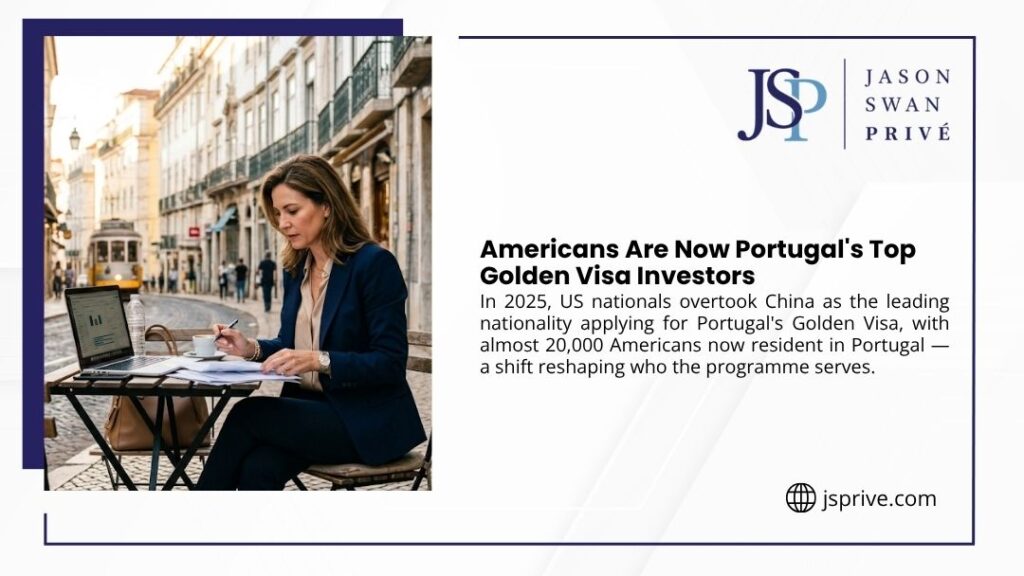
JS Privé has also seen growing interest from American applicants and covers that trend in its guidance on Portugal Golden Visa interest from the USA.
Is the Portugal Golden Visa Still Worth It in 2026?
The Golden Visa in Portugal can still be worth it in 2026, but not for everyone. It may suit investors who want legal residence in Portugal, European mobility, family inclusion, and a long-term base without full-time relocation. It may also suit families who want to keep options open while they decide whether living in Portugal makes sense later.
It may not suit people who want a fast passport, guaranteed investment returns, or a simple property purchase. It may also be the wrong fit for applicants who do not want to deal with documentation, banking checks, legal reviews, or renewal planning.
The programme’s strength is flexibility. Its weakness is complexity. Access to apply for the Portugal Golden Visa remains available, but the quality of the investment decision matters more than it did in the old property era.
For readers comparing the Golden Visa with other Portuguese routes, understanding Golden Visa vs D7 vs D8 can help frame the choice.
Speak With a Portugal Golden Visa Adviser Before You Invest
A Portugal Golden Visa application is not just a form. It is a capital decision, a family decision, and often a tax decision. The route you choose can shape your liquidity, your renewal process, your ability to apply for permanent residence, and your plans in Portugal.
This is where specialist guidance matters. Jason Swan works with a select number of high-net-worth individuals and families who want clear Portugal Golden Visa advice without generic noise. The aim is not to make the programme sound easy. It is to make the decision clearer, safer, and better matched to the applicant’s real life.
If you are comparing Portugal Golden Visa investment options 2026, the next step is not to pick the route that looks cheapest online. It is to check which route fits your family, your capital, your tax position, and your long-term plan. For private guidance before you move funds, you can book a Portugal Golden Visa consultation with JS Privé.

FAQs
Is the Portugal Golden Visa still available in 2026?
Yes, the Portugal Golden Visa remains available in 2026 for eligible third-country nationals. The programme has changed, though. New applicants can no longer use direct real estate investment as a qualifying route, so investors now focus on funds, cultural support, research, and business options.
What is the cheapest Portugal Golden Visa option?
The cultural support route is often the lowest headline route, with a standard minimum of €250,000 and a possible reduction in eligible low-density cases. Investors should remember that this route is usually contribution-led, so the capital may not be recoverable.
What is the best Portugal Golden Visa investment fund?
There is no single best Portugal Golden Visa investment fund for every applicant. A suitable fund depends on the investor’s risk tolerance, tax position, desired exit period, currency exposure, family plans, and legal eligibility. An independent legal and financial review is essential.
Can I get a Portuguese passport by investment?
No investor should treat the programme as a direct Portuguese passport by investment route. A Golden Visa may lead to legal residence first. Citizenship and a passport are separate matters subject to Portuguese nationality law.
How long does the Portugal Golden Visa application process take?
Processing time varies. Document collection, bank compliance, investment execution, application review, and biometrics can all affect timing. AIMA capacity and appointment availability can also create delays, so investors should plan with a realistic timeline.
What is the difference between the Portugal Golden Visa and D7 or D8?
The Golden Visa is based on a qualified investment. The D7 usually suits applicants with passive income, while the D8 is aimed at digital nomads and remote workers. The best option depends on income, relocation plans, tax position, and how much time the applicant wants to spend in Portugal.
Can family members be included in the Portuguese Golden Visa application?
Family members may often be included through family reunification. This can include a spouse or partner, dependent children, and, in some cases, dependent parents. Each family member must meet the document and eligibility requirements.
Do I need to live in Portugal full-time?
No, one of the main attractions of the Portuguese Golden Visa is the low stay requirement. Investors should still track their time in Portugal carefully and follow the renewal rules in place at the time.
Where to Go From Here
The Portugal Golden Visa investment options 2026 market rewards careful investors. The old property-led route is gone, and the new landscape is more technical. Funds, cultural support, research, and business investment can all work, but only when the route is compliant, the documents are sound, and the choice fits the family behind the application.
For some applicants, a Portugal Golden Visa investment fund will be the right balance of structure and flexibility. For others, a cultural route may offer a cleaner entry point. Entrepreneurs may find more value in a business route. The point is not to follow the crowd. The point is to choose with clarity.
If Portugal is part of your family’s long-term plan, take advice before capital moves. A short private review can prevent expensive mistakes, outdated assumptions, and unsuitable investments. To discuss your route with a specialist adviser, start with a private conversation through JS Privé’s Portugal Golden Visa advisory team.